
Self-ligating bracket systems in Dnipro
Maximum efficiency without unnecessary visits – choose self-ligating braces

Treatment speed:
Reduces the number of visits to the orthodontist due to fewer corrections
Comfort
Less friction and pressure on the teeth, providing a more comfortable treatment process
Implant placement is a reliable solution to the problem of missing teeth. The loss of one of them (and even more so several) negatively affects the functionality and aesthetics of the dentofacial system.
Main problems:Impaired chewing function, which can cause discomfort and worsen digestion.
Increased load on the jaw joints.
Bite disorder.
Increased load on neighboring teeth, tendency to shift, loosen.
Change in the shape of the lower part of the face, development of asymmetry.
In addition to the listed problems, the absence of one or more teeth reduces the attractiveness of a smile. It can also cause discomfort during conversation, laughter, which negatively affects social activity and quality of life. Implant placement is a proven and long-term solution for restoring a full dentition.
Main problems:
Self-ligating braces: features, varieties
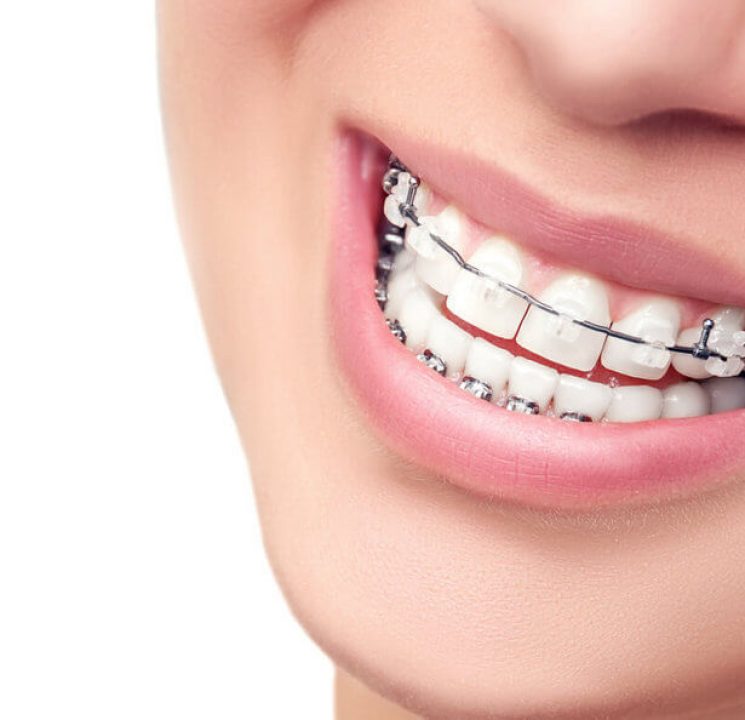
The device of ligature-free and ligature-based structures is similar in many ways. The fundamental difference lies in the method of fixing the archwire. In the first type of structures, it is held by miniature locks located on each bracket, in the second – by special locks.
Ligatures increase the volume of the bracket system. This makes it more noticeable and can cause significant discomfort when wearing, especially at the beginning. Replacing rubber or metal locks with special locks reduces the volume of the structure. This provides advantages in terms of aesthetics and ease of wearing. However, the main advantage lies elsewhere.
The ligature-free bracket system is able to self-ligate. The brackets are securely fixed on each tooth, but can move along the archwire. This is convenient because their location gradually adapts to the line of the dentition, which is being adjusted. In ligature designs, the braces fix the archwire immovably.
Types of self-ligating systems:
- By material of manufacture: metal, ceramic, sapphire.
- By location: vestibular, lingual.
- By degree of fixation of the archwire: active, passive.
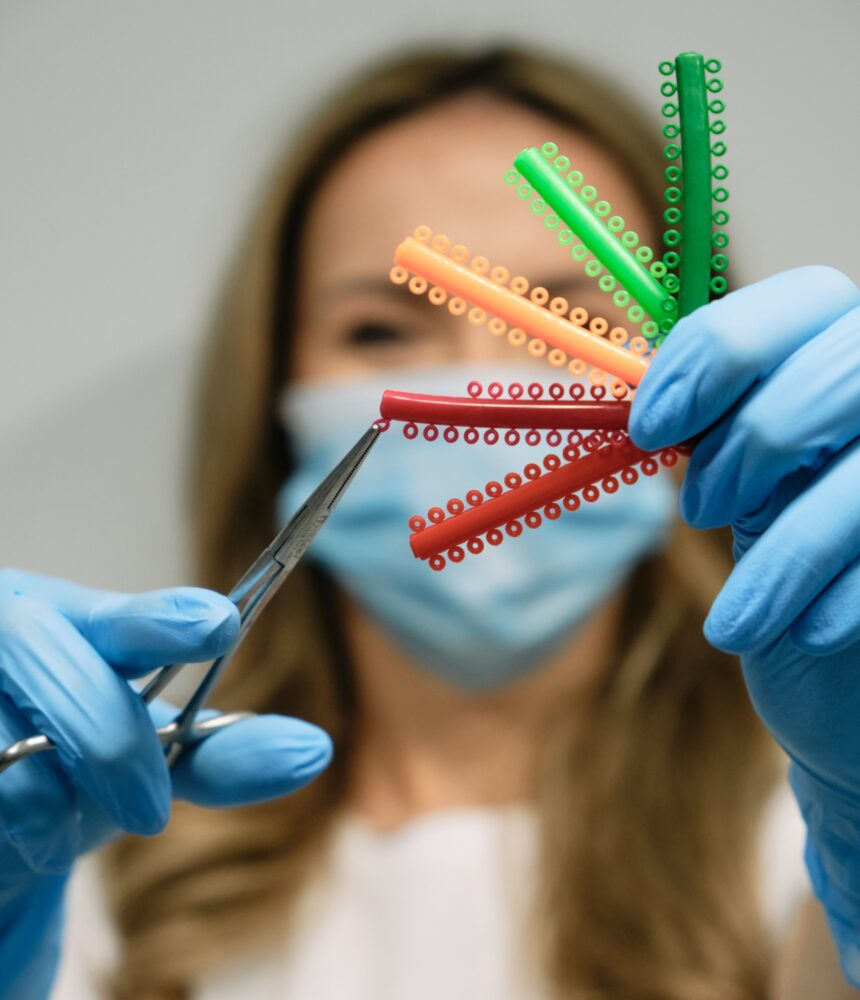
Self-ligating braces: advantages and disadvantages
The main advantages of ligature-free systems:- Compactness. The absence of ligatures reduces (actually and visually) each brace. This makes the design less noticeable and convenient to use.
- Adaptability of the archwire. The position of the teeth changes gradually due to the pressure exerted on them. And as the correction progresses, it must be consistently increased. If the design is ligature-based, you have to visit the doctor every month to tighten the archwire. The ligature-free mechanism is self-adapting.
- Comfortable correction. If the archwire is tightened manually, immediately after the procedure, the pressure on the teeth increases significantly, and as they move, it gradually decreases. This causes discomfort and periods of low-effective correction. Adaptive bracket displacement allows you to maintain constant optimal pressure on the dentition.
- Reduction of the wearing period. Since the pressure on the teeth is maintained at an optimal level all the time, the correction is effective 24/7. Therefore, the wearing period of the braces can be reduced by several months (compared to the ligature system).
- Easy care. The absence of rubber or metal retainers (ligatures) ensures less accumulation of dental plaque. This simplifies cleaning of the braces, which in the long term becomes an important factor in your comfort.
Price for installing self-ligating braces in Dnipro
| Service | Price |
|---|---|
| Consultation | from 300 UAH |
| Metal self-ligating braces (1 jaw) | from 24,500 UAH |
| Activation | from 600 UAH |
| Replacement of the arch | from 700 UAH |
Our Team
Our Doctors
{"cpt":"team","style":"4","columns":"3","show":"6","order":"DESC","orderby":"none"}
Reviews from Satisfied Patients
{"cpt":"testimonial","style":"2","columns":"3","show":"6","order":"DESC","orderby":"none"}
I thank the clinic and personally the wonderful doctor Veronika Igorevna for my healthy, clear and cured teeth. I recommend. A good clinic, state-of-the-art equipment and materials.
Igor Braslavets
I recommend Harmoni Dental, they are professionals who love their job and are attentive. The service is top notch!
Maryna Kolpakova
I came to this clinic on recommendation. I didn’t regret it. Excellent service, prices, location. Many thanks to Veronica! A doctor with great experience, knowledge and a light hand 🙂
Alina Syrko
Good dentistry, administrator Elizaveta is very friendly and will always help with any questions
Oleg Petrushyn
Good dentistry) reasonable prices) excellent staff) were with a child, for an examination; the doctor found an approach to him) without tears and hysterics) we are happy)
Tatyana Morgunova
Installing and caring for braces
Stages of the procedure:
- Consultation and initial examination. Together with the doctor, you discuss the problem, clarify your wishes and priorities. Based on this, the specialist selects possible correction methods.
- Medical diagnostics. Collection of anamnesis, passing of hardware examinations, comprehensive assessment of the condition of the oral cavity.
- Eliminating problems. Treatment of diseases of the teeth, gums, soft tissues and oral mucosa. Full preparation for the installation and many months of wearing braces.
- Planning the correction. Selection of the optimal design, manufacturing of elements (the brace system is developed individually for each patient).
- Installation of braces. Teeth cleaning, fixing elements, securing the arch.
- Both a regular soft brush and an orthodontic brush are used to clean teeth and braces.
- Rinse the mouth after each meal is mandatory.